
Cat Game - The Cats Collector!
Mino GamesCasual
4.621.23K Reviews
- Version
- 1.99.1788
- Installs
- 5.00M
- Age Rating
- Everyone
Screenshots
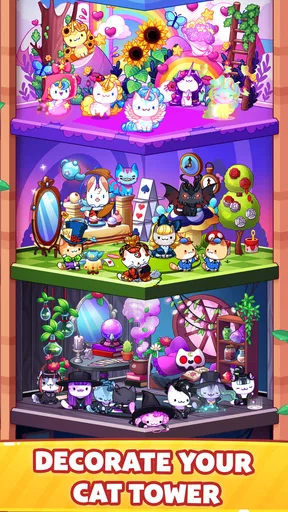
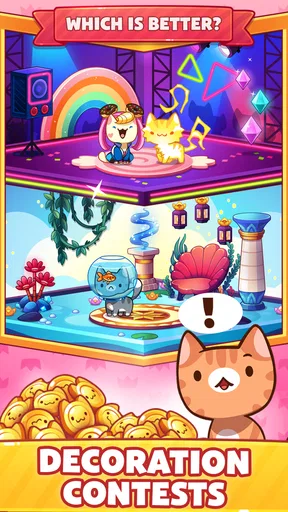
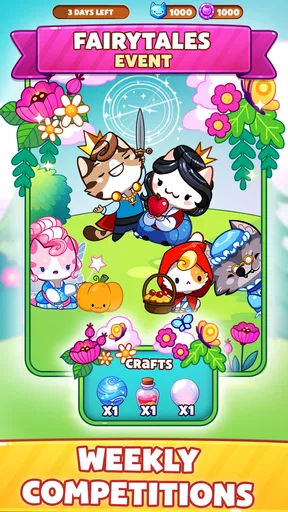
Our Review of Cat Game - The Cats Collector!
 Analysis by Appyee
I approached Cat Game - The Cats Collector! as the kind of casual game you open for a few minutes, put down, and return to later. That first impression is accurate, but it misses why the game can become surprisingly sticky. Developed by Mino Games, it combines a collection of adorable cats with a light decorating and event-driven routine. The appeal is not demanding strategy; it is the small satisfaction of checking in, improving a space, and seeing the collection become more personal over time.
It is free to start, rated for Everyone, and works on Android devices running at least version 5.0. The game has built a large audience, with over 5 million installs and a 4.6 average from around 92 thousand ratings. Those figures do not automatically make it right for every player, though. My experience is that it suits people who enjoy gentle progress and collecting much more than anyone looking for a deep simulation, a competitive challenge, or a completely uninterrupted offline pastime.
How Cat Game fits into a shared household
The easiest way to understand its place in a home is to imagine a short break during the day. One person may open the game while waiting for dinner, collect what is ready, look at a new cat, and leave. Later, another household member might enjoy seeing the decorated areas or discussing which cat looks best. That makes it naturally conversation-friendly, even when only one person is actively playing.
There is a useful distinction here: this is a shared-interest game, not a built-in household activity. I would not treat it like a local multiplayer title where several people can take turns in the same session. Instead, it works when one player owns the progress and others occasionally watch, comment, or help decide how the collection should feel. That boundary matters because casual games can become frustrating when everyone assumes they have equal control over one save.
For a parent and child, or for two adults sharing a tablet, I would agree on ownership before starting. Decide whose game it is, who can make purchases, and whether other people may rearrange anything. The game’s cute presentation makes it tempting to hand over the device without explanation, but a clear arrangement avoids accidental changes and arguments later.
The best shared-device habit is to separate playtime from account decisions. Letting someone browse the cats or rooms is low risk in practical terms, while spending currency or opening a purchase screen is a different matter. I found that thinking of those as two separate activities makes the game easier to enjoy together without pretending it offers formal family management tools.
What the opening hours actually feel like
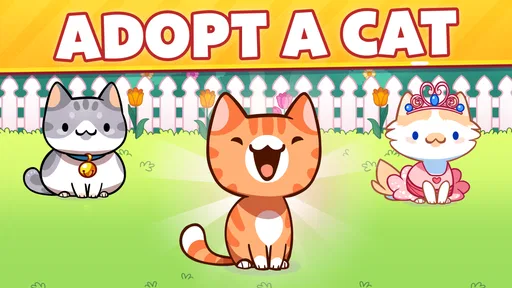
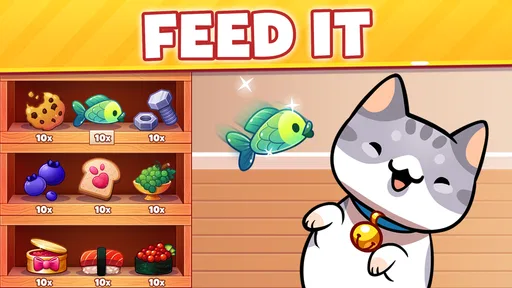
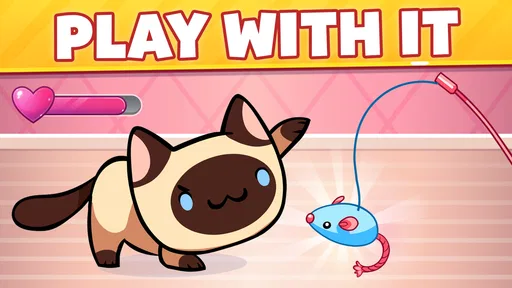
The early experience is built around the pleasure of building a cat collection rather than mastering complicated controls. You adopt cats, interact with them, and gradually make the surrounding world feel fuller. The loop is approachable enough that a younger player can understand the basic attraction quickly, while an adult can appreciate the tidy, low-pressure rhythm.
That simplicity is also the first limitation. If you need a clear campaign with a dramatic ending, you may find the experience loose. There is no obvious reason to rush. The reward comes from continuing the routine, watching the collection expand, and taking part in rotating activities. I see that as a strength for relaxed play, but a weakness for anyone who needs constant novelty or a strong narrative reason to continue.
On a phone, the short-session design feels comfortable. On a shared tablet, the larger screen can make showing the collection more enjoyable, especially if one person likes the visual side and another is interested in the cats themselves. Still, the game should be approached as a personal save that happens to be viewable by others, not as a communal board game.
Setting boundaries before anyone starts tapping
Because the game is free to download but includes optional purchases ranging from $0.99 to $99.99 per item, I would establish a household rule before handing over the device. The important conversation is not whether the game is suitable for children in general; its Everyone rating makes the presentation broadly accessible. The practical question is whether the player understands that some in-game choices can lead toward spending real money.
Younger players may focus on the cats and colorful rewards without naturally separating virtual currency from household money. I would explain that a free game can still present paid options, and that asking first is part of using it responsibly. That advice is especially important on a device used by several people, where the person holding the phone may not be the person who manages purchases.
For a shared iPad or Android tablet, I would also avoid treating a general device passcode as the only safeguard. A passcode protects the device, but it does not replace an agreed rule about who may play and who may approve purchases. If the game is installed on a child’s personal device, the adult responsible for that device should review the platform’s purchase settings separately rather than assuming the game itself will handle every boundary.
Another useful rule is to avoid making major collection decisions when someone is only “trying it for a second.” A quick handoff can turn into a purchase prompt, a rearranged room, or a changed routine. There is no need to make the game feel strict, but a simple “look, don’t spend” agreement keeps the relaxed tone intact.
Coordinating progress without taking over
The collection format creates small opportunities for cooperation. One person might care about finding every cat, while another prefers arranging the environment or choosing a pleasing theme. Those interests can coexist if the owner of the save remains clear. I would let a guest suggest changes, then make the final decision together instead of allowing unplanned tapping.
Weekly events are particularly useful for coordination because they give the household a shared reason to check in. I would not promise that every event will suit every player, but the changing schedule can prevent the routine from feeling completely static. A child may enjoy the excitement of a limited activity, while an adult may prefer the slower collection goal. Talking about priorities helps avoid the feeling that one player is “wasting” time on an event another person does not care about.
My practical approach would be to assign roles informally. The main player handles progress and any decisions that affect the save. A sibling, partner, or parent can act as a viewer, adviser, or decorator. That arrangement sounds simple, but it solves the most common shared-device problem: two people believing they are both entitled to change the same things.
There is also a useful stopping point. Instead of passing the device around continuously, set aside a short viewing session after the owner has finished collecting. This keeps the game from becoming a source of interruptions and lets everyone enjoy the cute presentation without turning every notification or available action into a household discussion.
Age, trust, and the right level of independence
The Everyone rating matches the game’s friendly surface and uncomplicated concept. I would feel more comfortable introducing it to a child than a game built around frightening imagery, harsh competition, or complicated social interaction. Even so, age suitability is not the same as purchase readiness. The most important factor is whether the player can follow the household rule about spending and understand that the save belongs to a particular account or device setup.
For a child who enjoys animals and collecting, the game can be a pleasant way to practice patience. Progress is more satisfying when the player does not expect every cat or reward immediately. I would encourage them to choose a small goal for a session, such as checking the collection or participating in an event, rather than constantly chasing the next unlock. That keeps the game from becoming an endless demand for attention.
For an older child or adult, the main question is self-control. The game’s gentle style can disguise how easily a collection loop encourages “just one more” decision. If a player tends to spend impulsively or becomes upset when progress is slow, a different casual game with fewer purchase prompts may be a better fit.
I also would not use the game as a substitute for supervision simply because it is cute. Shared-device play works best when the owner knows who is using the game, what they are allowed to change, and when the device should be put away. Those are household habits rather than features, but they make a real difference to whether the experience stays relaxing.
What makes the collection loop work
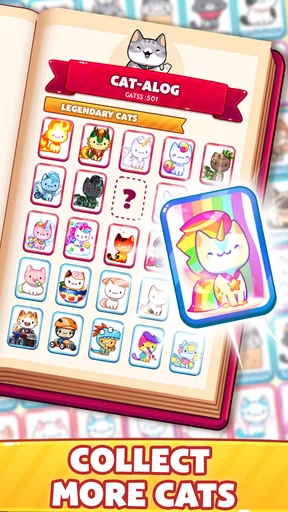
The strongest part of the game is its emotional clarity. Cats are immediately understandable, and the act of adding another one to a growing collection gives each session a recognizable purpose. I never needed a complicated explanation to know why I wanted to return: there was another small piece of the collection to check, another interaction to make, or another event to consider.
The decorating side gives the collection more personality than a bare checklist would. Even when the underlying actions are simple, placing attention on the surrounding space makes progress feel visible. This is where the game separates itself from a basic idle reward app. It is not only about waiting for a number to rise; it also encourages you to care about the look and mood of the little world you are building.
My first non-obvious tip is to treat the game as a collection journal rather than a race. If you focus only on the next reward, the repeated actions can feel thin. If you pause to notice how the cats and spaces fit together, the same loop becomes more satisfying. That mindset is especially helpful for children, who may otherwise judge the game only by how quickly something new appears.
A second tip is to use events as optional themes, not obligations. The weekly activities can add variety, but they should not dictate every session. If an event is not interesting to you, returning to the ordinary collection routine is still a valid way to play. This is an important trade-off: engaging with every event may provide more variety, but it can also make a gentle game feel like a schedule.
A third insight concerns shared play. Letting another person choose the visual direction can make the game feel collaborative without giving them control of the entire save. Ask for a recommendation, make one change, and then continue playing privately. That small boundary preserves both the social fun and the owner’s sense of progress.
Where the game may lose your attention
The same relaxed structure that makes the game accessible can eventually feel repetitive. Players who prefer puzzles with a clear solution, action games with responsive mastery, or management games with complex decisions may run out of meaningful choices. The cats are the central attraction, but cuteness alone cannot replace depth for everyone.
The free-to-play design also deserves an honest assessment. Optional purchases can be convenient for players who want to move faster or support the game, but they can change the emotional texture of collecting. A goal feels different when patience is the main route than when a purchase is always nearby. I would recommend enjoying the free loop first and deciding later whether spending adds value, rather than assuming every offer is necessary.
There is a further issue for people who dislike recurring engagement. Weekly events can be motivating, but they may also create the feeling that you are missing something by not checking in. I prefer to see them as invitations rather than commitments. If you know that limited-time activities make you anxious, this game may be less relaxing than its appearance suggests.
Compared with a traditional virtual pet game, this one puts more emphasis on building a collection and taking part in ongoing activities. Compared with a pure idle game, it offers more visual ownership and a stronger sense of arranging a personal space. Compared with a competitive casual game, it is much gentler and less dependent on winning against other players. The right alternative depends on what you want: choose a virtual pet game for a single companion, an idle title for minimal interaction, or a puzzle game for active problem-solving.
Device sharing, account ownership, and everyday reliability
Before installing it on a household device, I would decide whether the game should belong to one person or be treated as a shared pastime. That decision affects how carefully everyone handles the save and how comfortable the owner feels about others making changes. On a personal phone, the arrangement is straightforward. On a family tablet, it needs a conversation.
I would also keep expectations realistic about coordination. The game can give people something to discuss, but it should not be mistaken for a tool that manages turns, permissions, or family roles. Those boundaries have to come from the household. If you need separate profiles with strict control over every action, a game designed around individual accounts or a platform with stronger family-management options may serve you better.
The current version is 1.99.1788, and the minimum Android requirement is 5.0. That makes it accessible to a broad range of Android hardware, although actual comfort will still depend on the device and the way it is used. On an older shared phone, I would keep the session simple and avoid assuming that a large collection will feel equally comfortable on every screen.
Who should play it, and who should skip it
I recommend it to players who like cats, collecting, decoration, and short check-in sessions. It is a particularly good match for someone who wants a friendly game that can sit alongside a busy day instead of demanding full concentration. It also works well for households that enjoy looking at a game together while respecting one person’s ownership of the save.
I would be more cautious recommending it to someone who dislikes in-app purchase systems, recurring events, or progress loops without a strong final objective. If you want a game you can finish in an evening, this is not the obvious choice. If you want deep strategy, precise skill, or a robust multiplayer experience, another casual title will probably be more rewarding.
It is also not ideal for a child who cannot yet follow a clear no-purchase rule, even though the content is suitable for Everyone. The cute presentation should not be used as a reason to remove adult involvement from spending decisions. For a mature player, that concern is easier to manage; for a younger player, the household setup matters as much as the game itself.
My household verdict
After spending time with it, I see Cat Game as a warm, low-pressure collector with enough visual charm to support a daily habit. Its best moments come from gradual accumulation: adding cats, shaping the surrounding space, and checking what the current event offers without feeling forced to compete. The design is approachable, and the free starting point makes it easy to test whether that rhythm suits you.
The trade-off is that the game asks for patience and self-direction. It does not provide the dramatic structure that keeps every player engaged, and optional purchases mean a shared device needs sensible boundaries. I would install it for a cat-loving household that can agree on account ownership and spending rules, but I would skip it for anyone searching for a substantial strategy game or a fully cooperative family experience.
My final recommendation is simple: try the free version, play without rushing, and decide whether the collection itself feels rewarding before considering any purchase. If the sight of a growing group of cats and a gradually changing space makes you smile, the routine can be genuinely comforting. If it feels repetitive after a few sessions, no amount of extra content will change the fact that its core pleasure is gentle collecting. For the right player, that is exactly enough.
Verdict
Strengths of Cat Game - The Cats Collector!
- Charming cat designs make collecting feel rewarding.
- Simple controls are easy for players of all ages.
- Frequent events add variety beyond the main collection.
- Decorating spaces gives the game a personal touch.
- Offline-friendly moments make short play sessions convenient.
Limitations of Cat Game - The Cats Collector!
- Progress can feel slow without spending premium currency.
- Many rewards require watching advertisements.
- The large number of cats may feel overwhelming to organize.
- Energy and timers interrupt longer play sessions.
- Some content becomes repetitive after extended play.
Similar Picks in This Category
View All
My Talking Angela
Outfit7 Limited4.2

My Talking Tom
Outfit7 Limited4.3

Pou
Zakeh4.2

My Talking Tom 2: Pet Game
Outfit7 Limited4.3

Candy Crush Saga
King4.6

Bridge Race
Supersonic Studios LTD4.1
Frequently Asked Questions
What is Cat Game - The Cats Collector!?
Cat Game - The Cats Collector! is a casual collection and simulation game centered on adopting, caring for, and decorating a world filled with cats. You can welcome different feline characters, customize rooms, grow food, complete activities, and expand your cat village. Its relaxed presentation makes it suitable for players who enjoy cute visuals, light progression, and collecting rather than fast-paced action.
How do you play Cat Game - The Cats Collector!?
Gameplay mainly involves collecting cats, completing tasks, producing resources, and improving your surroundings. As you progress, you unlock additional areas, decorations, outfits, and activities for your feline residents. The controls are simple and designed for touchscreens, so the game is easy to understand after a short introduction. Progress comes from checking in regularly, completing objectives, and managing available resources.
Is Cat Game - The Cats Collector! free to download and play?
Cat Game - The Cats Collector! can generally be downloaded and played without an upfront purchase, but it includes optional in-app purchases. These may provide premium currency, special items, faster progress, or limited-time content. You can enjoy the core experience without spending money, although some upgrades and collection goals may take longer when playing entirely for free. Parents should review purchase settings before allowing children to play.
Does Cat Game - The Cats Collector! require an internet connection?
An internet connection may be needed for certain features, including account synchronization, advertisements, events, updates, cloud-related functions, and online interactions. Some basic activities might remain accessible when you are offline, but the complete experience is more reliable while connected. Availability can also depend on the version installed and the developer’s current requirements, so checking the store listing is recommended before traveling or playing without data.
Is Cat Game - The Cats Collector! suitable for children?
The game’s colorful art style, gentle theme, and straightforward mechanics can make it appealing to children and families. However, it may contain optional purchases, advertisements, timed rewards, or social and promotional features depending on the platform and current version. Adults should check the listed age rating, review privacy permissions, and enable purchase restrictions if necessary. Younger players may also benefit from guidance when managing in-game resources.
Play our best games!


